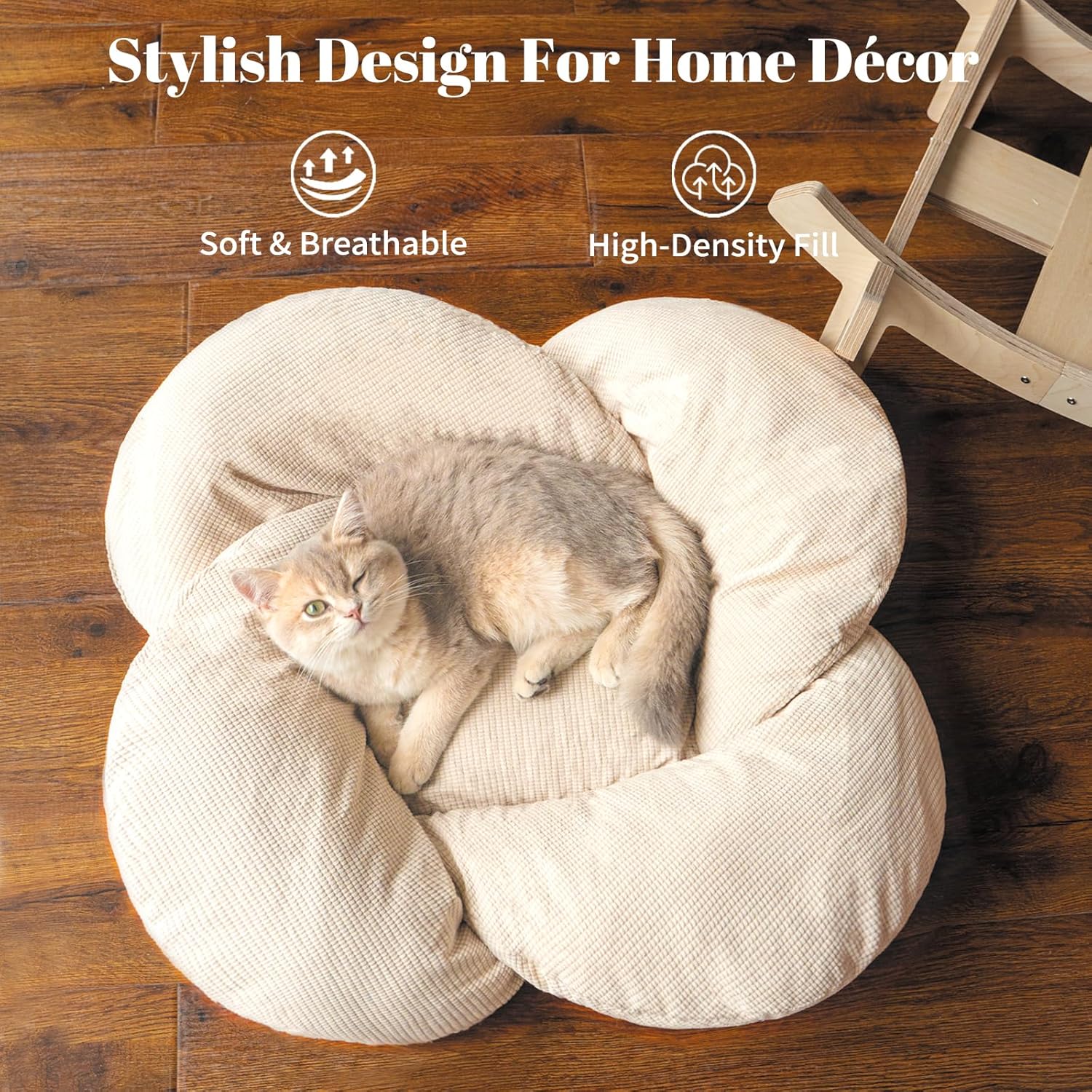
If you have ever bought a cat bed that looked good in the product photo, arrived smelling faintly of glue, and developed a wobble inside two weeks, you already understand the problem this guide is here to solve. An elevated cat bed — meaning a sleeping platform raised off the floor on legs, usually a wooden or metal frame with a fabric sleeping surface — promises two things at once: a resting spot that feels secure and nest-like to your cat, and a piece of furniture that doesn’t embarrass your living room. The “washable covers” part of that promise is what most buyers discover too late is either genuinely easy or an absolute ordeal, depending on how the product was engineered. This guide cuts through the marketing to show you what separates furniture-grade elevated beds from dressed-up polyester disappointments, names the tradeoffs at every price tier, and ends with a direct decision rule so you know exactly which category of product to buy for your situation.
Why Elevation Matters — and What It Costs You in Maintenance
Cats are hardwired to seek high ground. Per petmd.com’s overview of feline territorial behavior, elevation gives cats a clear sightline to monitor their environment, which reduces ambient stress — particularly in multi-cat households where a lower-ranked cat needs a socially neutral resting zone. International Cat Care’s published guidance on environmental needs reinforces this: vertical space and off-floor resting spots are listed as genuine welfare considerations, not just owner preferences. Cornell University’s Feline Health Center similarly notes that environmental enrichment — which includes varied resting heights — is a measurable stressor reducer for indoor cats.
The functional argument for elevation is strong. The design argument is obvious. The maintenance argument is where most products fall apart.
Here is the core tension: a fabric sleeping surface on a wooden frame is inherently harder to clean than a zippered orthopedic bed that goes straight into the washing machine as a unit. Every elevated bed design involves some kind of mechanical attachment between the textile and the frame — laces, elastic loops, hook-and-loop (Velcro), snaps, or a simple drop-in friction fit — and each attachment method trades cleaning convenience against aesthetic cleanliness and structural security. The buying decision is really a decision about which attachment method matches your cleaning frequency and tolerance.
By the Numbers
| Attachment type | Avg. time to remove cover | Machine washable? | Re-attachment ease |
|---|---|---|---|
| Lace-up / drawstring | 4–8 min | Usually yes | Low (re-threading required) |
| Hook-and-loop tabs | 1–2 min | Yes (mesh bag recommended) | High |
| Elastic loop over frame | 2–3 min | Yes | Moderate |
| Snap / button closure | 2–4 min | Yes | Moderate–High |
Figures derived from published product specs and aggregated owner review patterns across multiple retail platforms.
Frame Material: The Part That Outlasts Everything Else
When an elevated cat bed costs $180 versus $45, the price gap lives almost entirely in the frame. Understanding what you are actually paying for makes the math clearer.
Solid hardwood (beech, ash, rubberwood, walnut): The benchmark for longevity. Owners consistently report that solid hardwood frames from brands like Tuft + Paw, MiaCara, and Hepper show no structural degradation after two or more years of daily use, including households with cats up to 16–18 lbs. The visual payoff is also real — solid walnut has a warmth and grain variation that photographs well and ages gracefully, which is why it appears in so many Scandinavian and mid-century interior settings. The tradeoff is weight and price. A solid beech frame weighing 6–8 lbs will not slide when a cat launches onto it; that same mass adds friction when you need to move it to vacuum.
Engineered wood (MDF, particleboard with veneer): Dominant in the $40–$90 tier. The honest assessment, drawn from patterns in long-run owner reviews, is that veneer over MDF holds up reasonably well in low-humidity environments but is vulnerable to repeated exposure to moisture — relevant because elevated beds sit near floor level where cleaning sprays drift. Apartment Therapy’s coverage of cat furniture notes a clear owner-satisfaction gap between solid wood and veneered particleboard at the 18-month mark, with the latter showing swelling or delamination at joints in a meaningful minority of reviews.
Powder-coated steel: A different aesthetic entirely — industrial, minimal, pairs well with contemporary or Bauhaus interiors rather than warm Scandinavian schemes. Steel frames are essentially permanent; the structural failure mode is finish chipping at contact points, not joint failure. Weight capacity is typically higher than wood equivalents, making steel frames a practical choice for larger breeds or for households using the platform as a stacking point in a modular system. The tradeoff is thermal conductivity — a metal frame feels cold underfoot, which matters if your cat likes to press against the frame edge.
Bamboo: Increasingly common in the $60–$120 range. Bamboo is technically a grass but machines and finishes like hardwood. It is dimensionally stable and holds joinery well. The caveat owners note in reviews is surface texture — some bamboo frames have a slightly rough finish at untreated edges that can catch fur. If you are considering a bamboo-frame bed, published product specs should confirm whether the frame is sanded to at least 220-grit and sealed.
Cover Materials: What “Washable” Actually Means
This is where marketing language does the most damage. “Washable” on a product page can mean: (a) the entire cover is removable, goes in a standard front-loader, and comes out intact, or (b) spot-clean only, or (c) hand-wash recommended, or (d) technically machine-washable but the manufacturer quietly notes “cold, gentle cycle, lay flat to dry” — which in practice means it takes 24 hours to dry and most owners stop bothering after the second wash.
The materials that genuinely hold up through repeated machine wash cycles, based on patterns in owner reviews and published care instructions:
Wool bouclé: The aspirational choice at the premium tier. Brands like MiaCara and Lords & Labradors use wool or wool-blend bouclé because it reads as interior-grade upholstery — it is the same material category appearing on human sofas from mid-market Scandinavian brands. The realistic wash protocol for most wool bouclé covers is cold water, delicate cycle, laid flat or tumble-dried at very low heat. Owners consistently report that this works, with the caveat that bouclé loops can pill over time and that the surface attracts and holds cat hair more visibly than tighter weaves — which means you are committing to a lint roller as part of the maintenance routine.
Canvas and waxed cotton: Workhorse materials in the $60–$130 tier. Canvas covers typically survive hot-water washing better than bouclé and dry faster. The aesthetic sacrifice is texture warmth — canvas reads as more utilitarian than bouclé, though natural un-dyed canvas fits well in mid-century and industrial interiors. Moderncat.com’s product coverage consistently highlights canvas-covered elevated beds as the practical midpoint between washability and visual appeal.
Sherpa and fleece: Common in the $30–$70 tier and thermally effective — owners report cats actively preferring Sherpa surfaces in cooler months. The washability is genuine and effortless: most Sherpa covers are zippered off, machine-wash warm, tumble-dry low, and back on in under an hour. The design integration story is weaker. Sherpa reads as functional pet product rather than furniture, which matters if the bed is in a main living space rather than a bedroom or home office.
Organic cotton and linen blends: The choice for households prioritizing natural fibers and easy care simultaneously. Linen-cotton covers wash repeatedly without significant shrinkage if sized correctly for the frame, and the material breathes well in warmer climates. The tradeoff versus bouclé is tactile warmth — linen reads as slightly cool and casual, which fits coastal, Japandi, or relaxed-contemporary interiors better than it fits formal mid-century schemes.
Price Tiers and the Honest Tradeoffs
$15–$45 (entry-level): Typically bamboo or MDF frame, Sherpa or polar fleece sleeping surface, lace-on or elastic-loop cover attachment. These beds deliver genuine value for a first cat or a secondary sleeping spot. The frame longevity question is real — MDF near a food or water bowl is a maintenance liability. Washability is straightforward because Sherpa is forgiving. Design integration is limited.
$60–$130 (mid-range): Solid rubberwood or engineered-wood-with-solid-wood-legs, canvas or linen-cotton covers, hook-and-loop or snap attachment. This is the sweet spot for the broad editorial core of PurrPad’s audience. You get genuine frame durability, covers that wash and dry in a standard cycle, and enough aesthetic range to fit most interior styles. Apartment Therapy’s roundups of apartment-friendly cat furniture consistently land in this tier for their editorial picks.
$180–$450 (premium/designer): Solid beech, walnut, or ash frames; wool bouclé, boucle-blend, or high-count canvas covers; precision-fit snap or magnetic closure systems. These products are evaluated as furniture first. Brands like Tuft + Paw and Hepper engineer their frames to match the proportional language of mid-century and contemporary furniture — tapered legs, clean joinery, restrained finish options. The washability protocols are more involved than mid-range, but owners in this segment typically report that the care ritual is acceptable given the aesthetic return. The honest question at this tier is whether your cat will use it — elevation preference varies by individual cat, and a $380 walnut platform that a particular cat ignores is a painful lesson.
The Decision Rule
If you are choosing between an elevated bed with a solid wood frame and a removable, machine-washable cover, the selection logic is:
-
If your cat is one of one, in a bedroom or low-traffic space, and you care about design integration: go mid-range solid rubberwood with a linen or canvas cover. You get frame durability, real washability, and enough style credibility for most interiors without the premium price.
-
If you have two or more cats, or a single cat with a history of accidents: prioritize hook-and-loop or snap closure covers in canvas or linen-cotton. Avoid lace-up and drawstring attachments — they are the reason covers stop getting washed.
-
If the bed is in a primary living area and needs to read as actual furniture: the wool bouclé premium tier is the honest choice. Accept the higher care effort as part of the cost. Published specs from Tuft + Paw and MiaCara confirm cold-delicate washability; follow those protocols, not hope.
-
If you are outfitting three or more cats or a cattery setting: steel frame with removable canvas covers at the mid-range is the durable-and-practical call. You will wash covers frequently; lace-up anything will be abandoned by week three.
The beds that survive real life are not the most expensive ones. They are the ones where the frame material matches the moisture environment, the cover attachment can be operated one-handed without instruction, and the washing cycle matches the cleaning habits you actually have — not the ones you intend to adopt.