A cat scratcher is exactly what it sounds like: a surface designed specifically for your cat to drag its claws down, satisfying a deeply hardwired need to sharpen nails, stretch muscles, and mark territory. Without a dedicated scratcher, your cat will find its own — usually your sofa. The two materials you’ll encounter in almost every scratcher on the market are cardboard (tightly layered corrugated paper, die-cut into flat pads or curved loungers) and sisal (a coarse natural fiber, either rope-wrapped around a post or woven into flat panels). They feel different, last differently, photograph differently, and fit different households. This guide breaks down how to choose between them — not just by what your cat prefers, but by how each material performs in your actual home over a realistic ownership window.
What Each Material Actually Does (and Doesn’t Do)
Cardboard: High Engagement, Short Clock
Corrugated cardboard scratchers work because the layered paper grain lets cats dig in — claws catch, shred slightly, and release with satisfying texture. According to the Cornell Feline Health Center’s guidance document “Destructive Scratching” (vet.cornell.edu), cats scratch partly to remove the outer dead layer of their claws, and cardboard’s fibrous structure does that job efficiently. This is why adoption is typically fast: most cats need no training period with a flat cardboard pad.
What owners consistently report about cardboard:
- Near-universal cat acceptance, even for finicky scratchers
- Satisfying shredding behavior that keeps cats engaged longer per session
- Debris — fine cardboard dust and shredded flakes — is the number-one owner complaint across aggregated reviews
- Replacement cycles average 4–8 weeks for a single-cat household scratching daily; multi-cat households may replace monthly or faster
- Most flat pads are reversible (two usable sides), which effectively doubles the lifespan but doesn’t change the math much at scale
The design problem: Cardboard scratchers are almost universally beige, brown, or gray — the color of raw paper. They’re flat, they shed, and they signal “utilitarian pet product” from across the room. Budget pads ($8–$18) hold up about as well as mid-range ones ($22–$35) because the ceiling on cardboard longevity is the material itself, not construction quality. Apartment Therapy’s article “The Best Cat Furniture That Doesn’t Look Like Cat Furniture” notes this tension directly — cardboard is almost never the recommendation for design-forward rooms.
Where cardboard wins: Any household where cat buy-in is the primary problem (senior rescues, anxious cats, picky scratchers), any space where the scratcher lives in a utility zone like a laundry room or mudroom, and any budget situation where replacement cost needs to stay low.
Sisal: Longevity and Aesthetics, Slower Buy-In
Sisal is a plant fiber — technically from the agave sisalana plant — that’s either twisted into rope and wound around a post (rope sisal) or woven flat into a fabric panel (woven sisal). The two behave differently. Rope sisal on a post handles vertical scratching, which International Cat Care’s resource “Encouraging Cats to Use Scratching Posts” (icatcare.org) notes is the natural posture cats prefer when fully stretching: front legs extended overhead, spine elongated. Woven sisal panels — found on the flat sections of many premium cat trees — handle horizontal and angled scratching.
What owners and reviewers consistently report about sisal:
- Initial hesitation from some cats, especially if they were raised on cardboard; retraining takes 1–3 weeks on average per owner accounts
- Dramatically longer lifespan — well-reviewed sisal posts used daily by one cat show meaningful wear at 6–12 months, not weeks
- Zero (or near-zero) debris: sisal frays at contact points but doesn’t shed the fine particulate that cardboard produces
- Rope sisal will eventually unravel at high-contact zones; woven sisal panels tend to pill and thin rather than unravel
- A tight-wound, dense rope wrap is the construction spec to prioritize — reviewers in Wirecutter’s “The Best Cat Scratching Posts” (nytimes.com/wirecutter) consistently flag loosely wound rope as the primary failure point on budget sisal posts
The design case for sisal: Natural fiber, earthy texture, neutral tones. Sisal reads as intentional in a mid-century or Scandinavian-leaning room in a way cardboard simply cannot. Brands that have built significant portions of their product lines around sisal do so because sisal photographs as furniture rather than pet equipment. Modern Cat Magazine’s buying guidance consistently positions sisal-wrapped posts as the default recommendation for owners who care about visual integration.
Where sisal struggles: Cats that have only ever known cardboard may ignore a sisal post for weeks. In a multi-cat household with a mix of scratching personalities, you may find yourself running both materials in parallel — which is actually the most common real-world setup among experienced owners.
The Numbers: Cardboard vs. Sisal Side-by-Side
| Factor | Cardboard | Sisal (Rope or Woven) |
|---|---|---|
| Avg. lifespan (1 cat, daily use) | 4–8 weeks | 6–14 months |
| Debris output | High (fine dust + flakes) | Low (surface fraying only) |
| Cat adoption rate | Very high — near-instant | Moderate — may need 1–3 weeks |
| Price range | $8–$35 | $25–$200+ |
| Design integration | Difficult | Strong — neutral, natural |
| Annual replacement cost (est.) | $60–$130+ | $25–$80 (single post) |
By the numbers: A household replacing a $22 cardboard pad every six weeks spends roughly $190/year on scratchers. A $65 sisal post replaced once a year costs $65. The cost-per-use math favors sisal decisively over any window longer than three months — even accounting for a higher entry price.
The Tradeoffs That Actually Matter at the Decision Point
If you’re currently choosing between these two materials for a specific room or a specific cat, here’s where the real decisions live:
Tradeoff 1: Immediate Cat Buy-In vs. Long-Term Performance
Cardboard wins on buy-in. Sisal wins on longevity and cleanliness. If you have a cat that’s currently scratching furniture and you need to redirect behavior this week, cardboard is the fastest intervention. International Cat Care’s guidance document “Encouraging Cats to Use Scratching Posts” (icatcare.org) emphasizes placing attractive surfaces immediately near the problem location, and cardboard’s near-universal appeal makes it the fastest tool for that job. Place it adjacent to the furniture, not across the room — proximity to the problem site is the key variable.
If your cat already uses a scratcher reliably, you’re in a position to invest in sisal for the long-term benefits.
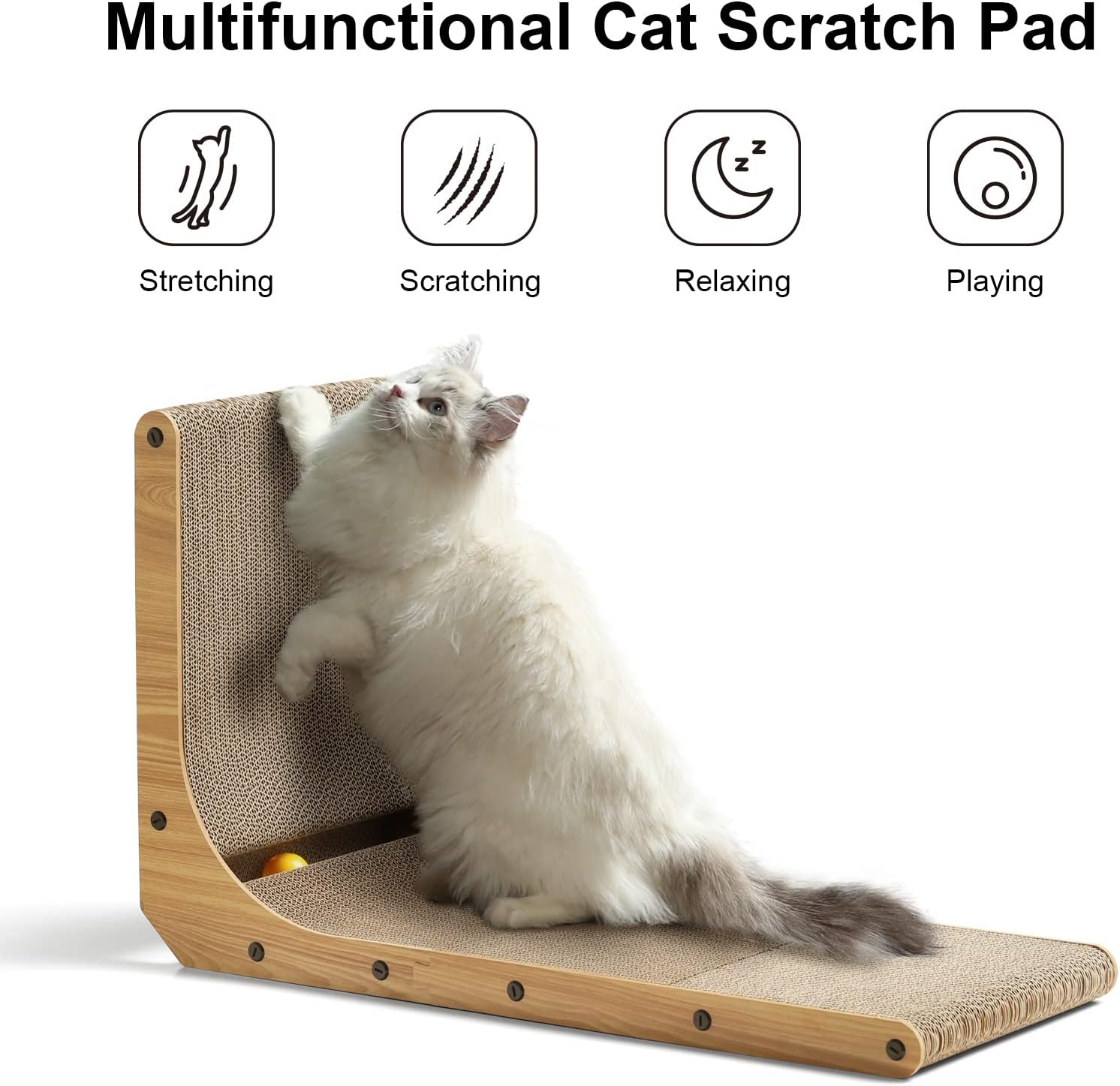
FUKUMARU
$17.77
In stock on Amazon
Check price on AmazonTradeoff 2: Multi-Cat Households Change the Equation
At three or more cats, the cardboard replacement math becomes punishing. Owners in long-run review threads consistently report replacing cardboard pads every 2–3 weeks rather than 6–8. At that cadence, annual cardboard spend can exceed $300 for a household with two or three active pads in rotation. Sisal doesn’t degrade as fast under multi-cat pressure — a post rated for heavy use will typically show 6–8 months of life even with three cats working it daily, per aggregated owner reports from long-format review threads.
For households with four or more cats, the operating cost of cardboard becomes a real line item, and sisal or hybrid sisal-wood structures start looking like the economical choice despite higher upfront cost. The Cornell Feline Health Center’s “Destructive Scratching” resource notes that multi-cat homes benefit from multiple dedicated scratching surfaces placed in high-traffic zones — a principle that applies equally to both materials, but that sisal supports more cost-efficiently at scale.
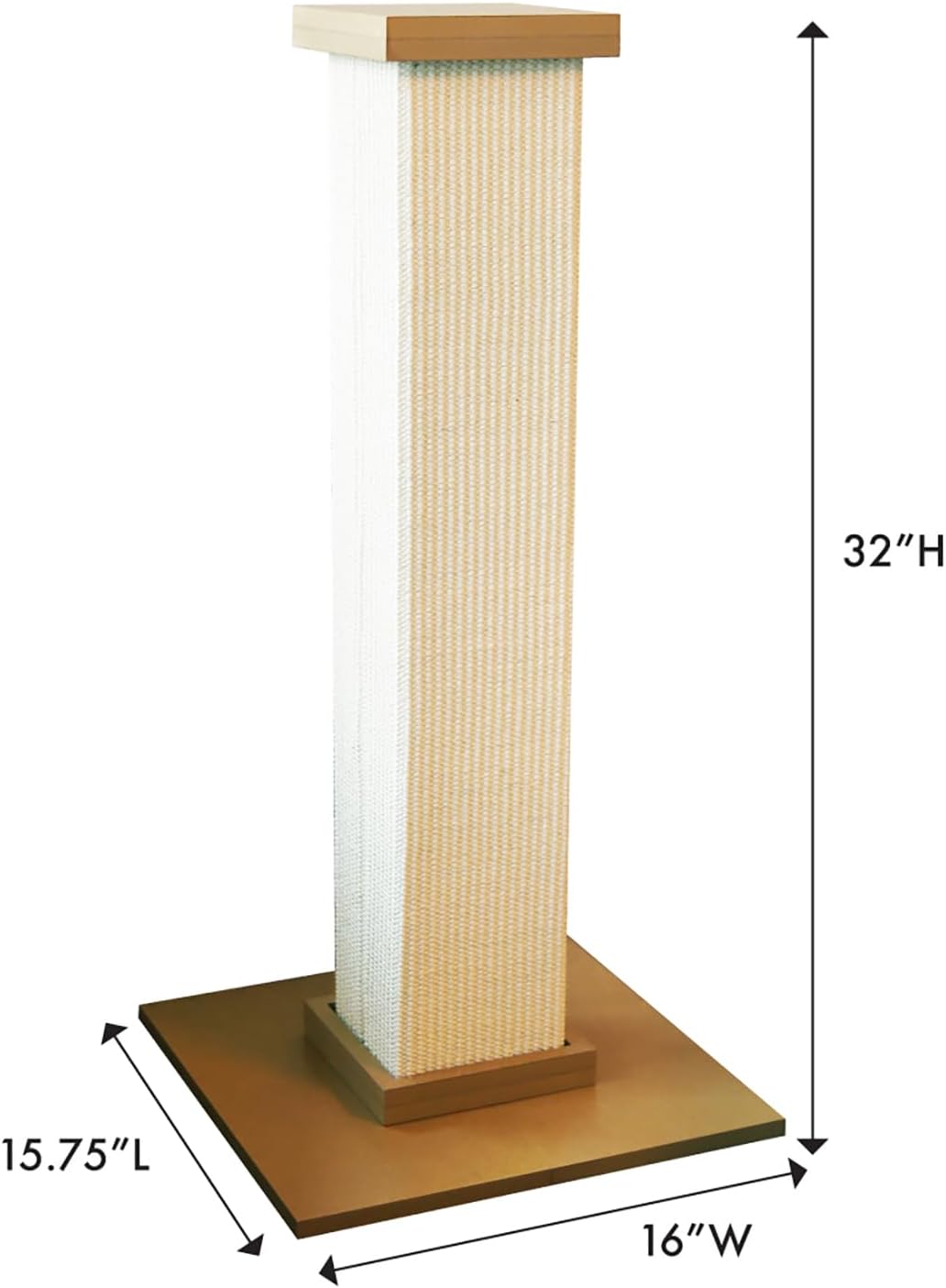
SmartCat
$59.99
In stock on Amazon
Check price on AmazonTradeoff 3: Room Placement, Visual Weight, and Long-Term Aesthetics
This is the tradeoff design-conscious owners feel most acutely but sometimes underweight in buying decisions. A cardboard scratcher in a living room — even a thoughtfully shaped one — will likely clash with a considered interior within a few weeks of use, because shredded cardboard doesn’t read as intentional. Sisal holds its visual character longer, ages more gracefully (fraying is less visually chaotic than shredding), and comes in forms — the cylindrical post, the angled panel, the freestanding arch — that furniture designers have had more success integrating into room layouts.
Apartment Therapy’s “The Best Cat Furniture That Doesn’t Look Like Cat Furniture” makes the case clearly: natural-fiber surfaces, including sisal, are the material category most consistently featured in design-integrated cat furniture roundups. Cardboard simply doesn’t appear in that conversation.
If the scratcher lives in a primary living space and you care about how the room photographs or feels to guests, sisal is almost always the correct material choice. If it’s in a utility space or secondary bedroom, cardboard’s practicality is fully defensible.
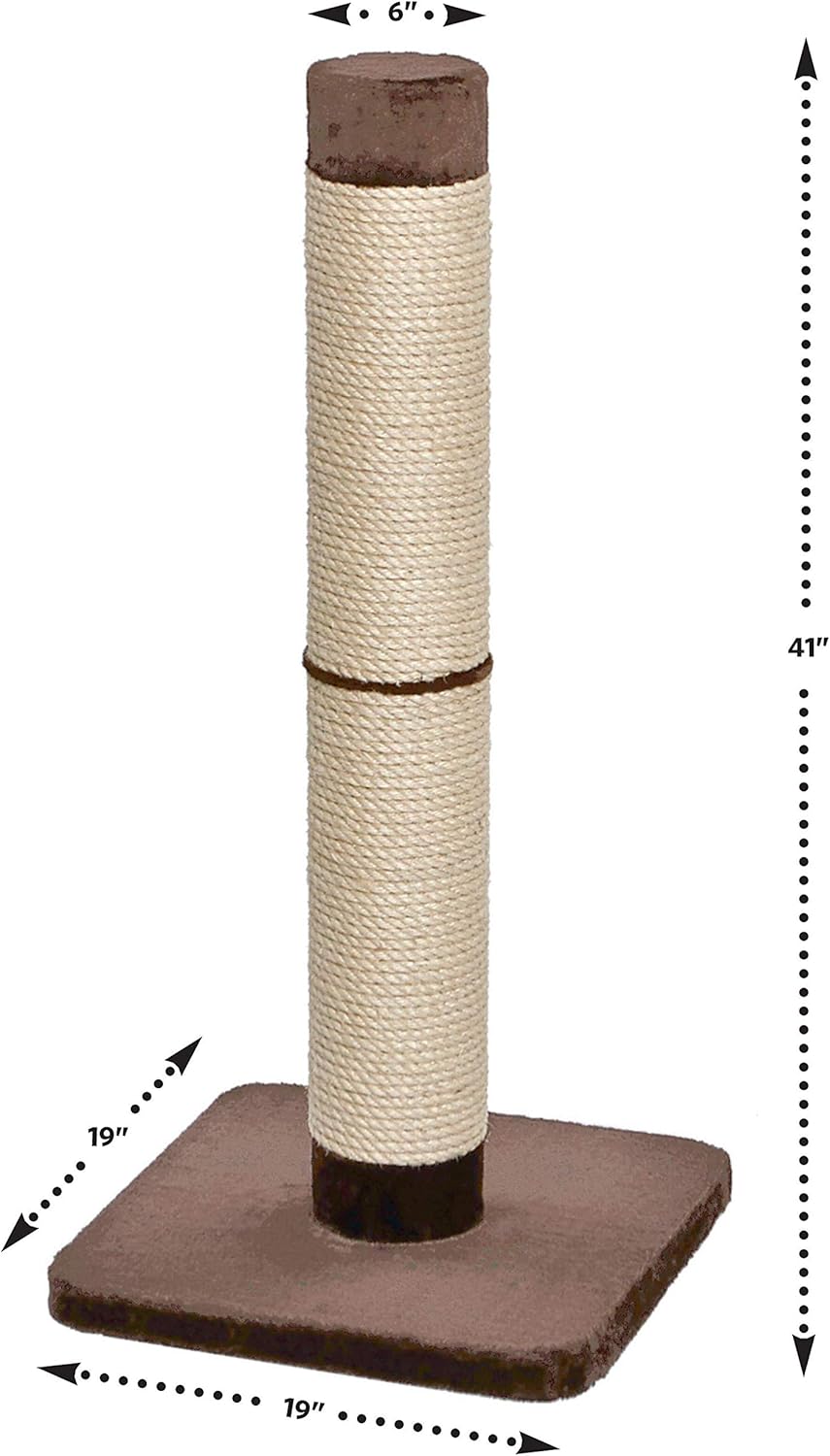
MidWest
$59.99
In stock on Amazon
Check price on AmazonThe Hybrid Reality: Why Many Owners Run Both
Many experienced owners land here: a sisal post or panel in the main living area for aesthetics and longevity, a cardboard pad near any spot the cat has historically shown interest in scratching furniture, and periodic rotation to keep novelty high. This isn’t a hedge — it’s arguably the most honest answer to “which is better,” because the two materials solve different problems.
Wirecutter’s “The Best Cat Scratching Posts” (nytimes.com/wirecutter) reflects a similar dual-track approach in its recommendations: a quality sisal post as the primary investment, a low-cost cardboard pad as an active deterrent near vulnerable furniture. Modern Cat Magazine’s buying guidance echoes this, particularly for households that are in the process of transitioning a cardboard-habituated cat toward a longer-lasting sisal setup — running both during the transition period reduces the risk that the cat simply opts back to the furniture while adjusting.
The hybrid setup also gives you useful diagnostic information. If your cat reliably chooses cardboard over a sisal post when both are available and well-positioned, that’s meaningful signal: the cat may need more time with the sisal surface, or the sisal post’s height, angle, or texture may not match this particular cat’s scratching preferences. International Cat Care’s guidance recommends observing natural scratching posture — horizontal versus vertical, stretched versus hunched — and matching the scratcher orientation to what you observe. A cat that scratches low on furniture legs may genuinely prefer a horizontal cardboard pad over a vertical sisal post, and that preference should inform your long-term purchase, not just the short-term intervention.
The Decision Rule
If your cat doesn’t yet reliably use a scratcher, or if you’re trying to protect a specific piece of furniture right now: Start with cardboard. Place it adjacent to the furniture. Once the behavior is established, introduce sisal alongside it.
If your cat already scratches reliably and you’re optimizing for design integration or long-term cost: Choose sisal. Budget for a post with a dense, tightly wound rope wrap — the construction spec that Wirecutter’s scratcher roundup most reliably correlates with longevity. Avoid loosely wrapped or thin-gauge rope regardless of price tier.
If you have three or more cats: Run both materials, but let the math push your investment toward sisal-forward products. The annual cost savings are real at scale, and the debris reduction alone justifies the shift.
If design is a primary filter: Sisal is the answer. Treat it the way you’d treat any natural-fiber furnishing — it belongs in the room; it earns its place. Cardboard doesn’t clear that bar, and no amount of clever shaping changes the base material’s limitations.
The honest summary: neither material is universally better. Cardboard is fast, accessible, and universally accepted. Sisal is durable, visually integrated, and cost-effective over time. Your household’s current scratching situation, your room priorities, and your tolerance for debris are the three variables that determine which one deserves your money — or whether both earn a spot.